


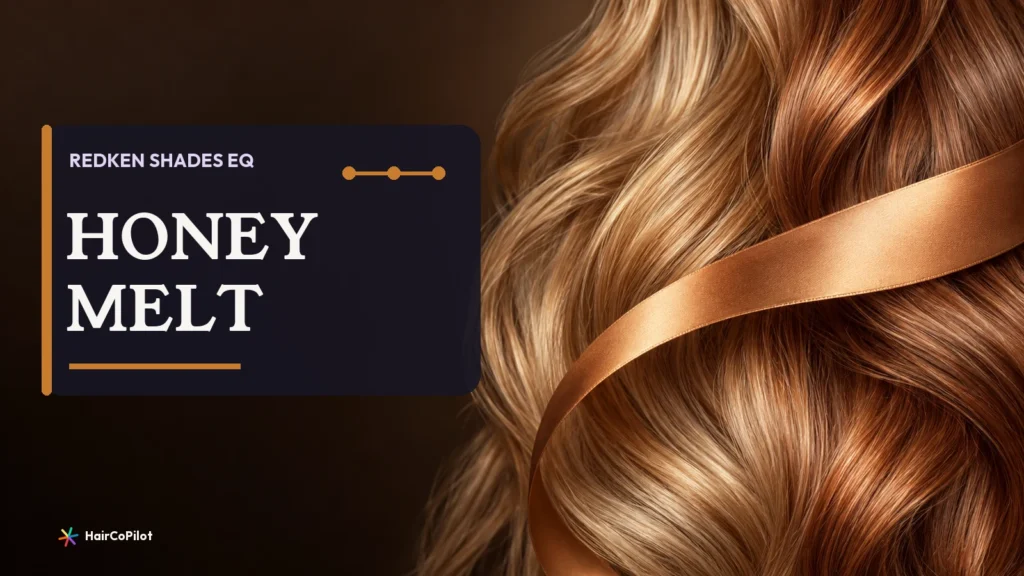
Honey Melt is a technique, not a formula you can apply to any head that walks in. Redken published it alongside a new Shades EQ shade family, with the lightening and toning formulas for one specific demonstration look on one specific base. Reading it as a recipe is how a client ends up disappointed. Reading it as a worked example of a warm, low-contrast result, and then rebuilding the consultation from your own client’s starting point, is how it becomes useful. This guide separates what the brand actually published from what you still have to decide.
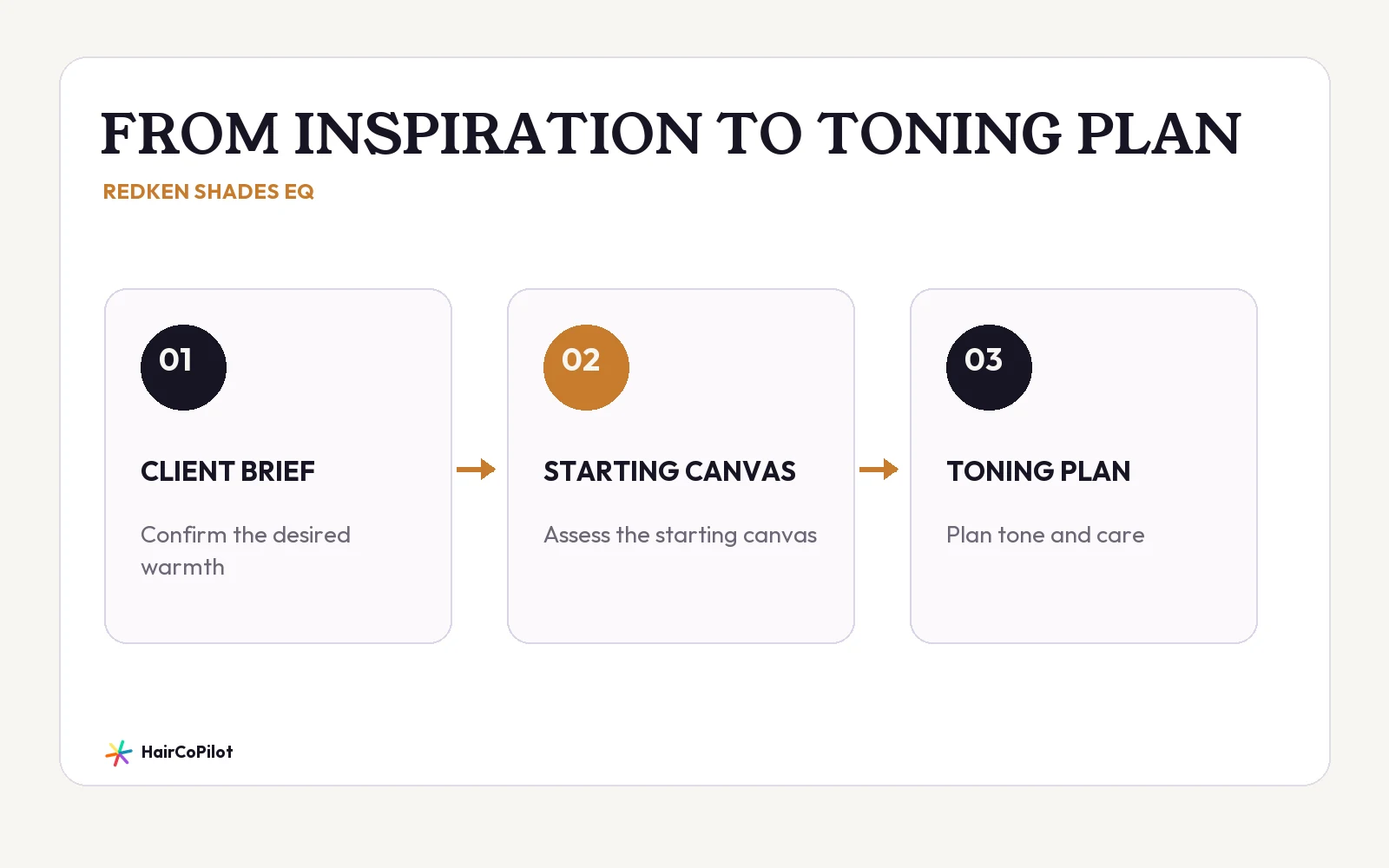
What Redken published, and when
The Honey Coppers collection was announced on the Redken professional site on 22 June 2026. According to Redken’s own announcement, it adds three Shades EQ Gloss shades in levels 6, 8 and 9, co-created with Redken Global Artistic Ambassador Adrienne Dara. The shades are built on a brown-to-tan background with gold as the primary reflect and copper as the secondary, which is the technical detail that matters most in consultation: gold does the work, copper adds the nuance.
The three shades are 09HC Honey Butter, 08HC Honey Bee and 06HC Honeycomb, named on the Redken Italy page describing the technique, which carries an update date of 31 August 2026.
Redken’s own guidance on how the shades behave is worth repeating accurately, because it is more specific than most launch copy. 09HC is positioned as a delicate additive in level 9 formulas, to add soft warm reflection without overpowering a blonde. 08HC is described as ideal for strawberry blonde formulation, with a golden-apricot undertone. 06HC is presented as the most versatile of the three, usable as an all-over gloss for a soft wash of warmth or blended with NB shades to anchor the root with balanced depth.
The Honey Melt itself is described as a universal foiling method that combines diagonal foils with open-air balayage to create soft, fanned dimension, finished with a melted glaze. The Italian page publishes the full formulas used for the demonstration look, including the lightener and both Shades EQ mixes, and a step-by-step sectioning pattern.
What the published formulas are, and what they are not
The formulas on the Redken Italy page are a record of one demonstration service. They are not a prescription.
They assume a particular starting base, a particular amount of existing lightened hair, a particular condition and a particular target. Your client has none of those by default. Applying a published glaze formula to a different base will not produce the photographed result, and the gap between the two is what the client will remember.
So use them the way an educator intends them to be used: as evidence of the tonal logic. Gold-led warmth with a copper secondary, anchored with a neutral-brown root melt, with the warmest and lightest shades reserved for mid-lengths and ends. That logic transfers. The millilitres do not.
Assess the base before you promise the result
Is there enough clean light in the mid-lengths?
The Honey Copper shades are deposit-only. Shades EQ has no lift. If the mid-lengths and ends are not already at a level that can carry a level 8 or 9 honey reflect, the glaze will read dull and muddy rather than luminous. The demonstration look reaches that level with a lightening step before any toner is mixed, and any comparable service on your client will need the same.
That is the first thing to say out loud, because clients read the inspiration photo as a colour and stylists read it as a two-part service.
What is already on the hair?
Previous box colour, old direct dye on the ends or a heavy build-up of warm permanent tint will all change what the lightening step can safely achieve. This is the point at which a strand test earns its place rather than a patch test: the two answer different questions, and our guide to patch test and strand test sets out which one you need here.
Does the client actually want warmth?
Honey copper is a warm result by design. A client who has spent three years asking you to keep her blonde cool is not a candidate, however much she likes the photo. Gold as a primary reflect is exactly the tone she has been avoiding, and the consultation should surface that before the diary slot is booked. If the underlying pigment logic is not something you explain confidently, our guide to professional colour theory covers the sequence you are working with when you add gold over pre-lightened hair.
What is the regrowth going to look like?
A low-contrast, melted result is one of the more forgiving grow-outs available, because there is no hard line at the root. That is a genuine selling point and it should be stated as one. But it is only true if the root is anchored with depth rather than lightened to the scalp, which is precisely what the demonstration technique does.
A salon example
A client brings in three saved images of honey copper hair. She is a natural level 6 with no grey, has had half-head foils twice in the past year, and the ends are at roughly level 8 with cool toning from her last appointment. She wants “the warm one” and asks whether it can be done in one visit.
The consultation gives her three separate answers.
First, the warmth is achievable, because her existing lightened mid-lengths can carry a gold-led reflect. That part is a toning decision, not a lightening one.
Second, the amount of light in the images is more than she currently has at the front, and the fanned dimension in the reference comes from a lightening pattern, not from the glaze. Reaching it means foils at the front and a glaze afterwards, in one longer appointment rather than a toning slot.
Third, the cool toner on her ends will influence how the honey reads on the first application. It will look softer than the reference on day one and settle over the first two washes. Saying this before the service, rather than defending it afterwards, is what keeps the result a success.
She books the longer appointment. The decision that made it work was refusing to treat the reference image as a formula.
Plan the maintenance in the same conversation
Warm, gold-led deposit on pre-lightened hair fades, and it fades towards the underlying warmth rather than towards neutral. That is a different maintenance story from a cool blonde, and it is generally an easier one: as the glaze softens, the result stays in the same tonal family instead of turning a colour the client did not order.
What it does need is a return point. Decide with the client whether the next visit is a glaze refresh only, or a lightening and glaze together, and write that decision down at the end of the appointment rather than reconstructing it six weeks later. Our guide to digital colour records covers what belongs in that note, including the processing time, which is the detail most often lost.
Before you post about it
Two accuracy points are worth respecting if you plan to promote this service.
The collection was announced on Redken’s United States professional site in June 2026, and the technique page on Redken’s Italian site carries an August update. Neither page read for this article stated an Italian retail availability date. Check with your distributor before advertising the shades as stocked.
And the Honey Melt is a signature technique attached to a shade launch. It is an education and inspiration asset, which is a perfectly good reason to write about it. It is not evidence that honey copper is the most requested colour of the season, and it should not be presented as one.
Frequently asked questions
What are the three Honey Copper shades?
09HC Honey Butter, 08HC Honey Bee and 06HC Honeycomb, in levels 9, 8 and 6 respectively, named on the Redken Italy technique page.
Is Honey Melt a formula or a technique?
A technique. Redken describes it as a universal foiling method combining diagonal foils with open-air balayage, finished with a melted glaze. The specific formulas published alongside it apply to the demonstration look and its starting base.
Can Honey Copper be used on a brunette?
Redken positions 06HC as usable as an all-over gloss for a soft wash of warmth, or blended with NB shades to anchor root depth. Whether it is visible on a given brunette depends on that client’s level and existing pigment, which is a strand-test question.
Is the collection available in Italy?
The pages read for this article do not state an Italian retail availability date. Confirm with your distributor before promoting it.
Use HairCoPilot in your salon
A technique you have adapted is only repeatable if the adaptation is written down. HairCoPilot lets you build the formula with the line, shade, quantities, developer and processing time you actually used, save it to the client record, and reopen the service at the next visit. Start your free trial.