



Retail works best when it is treated as part of the professional service, not as a sales interruption at the till. A client who understands how to protect colour, manage texture or maintain scalp comfort is more likely to preserve the result created in the salon. The commercial benefit follows from a recommendation that is relevant, specific and easy to use.
Start with the service objective
Before recommending a product, identify what the client needs to maintain. For a colour client, the priority might be tonal longevity, reduced heat exposure or a gentler cleansing routine. For a textured haircut, the priority could be moisture balance and a styling method that supports the natural pattern. The recommendation should connect directly to the consultation and the work completed that day.
Use three questions:
- What result are we trying to protect?
- What is currently making home care difficult?
- How many steps will the client realistically follow?
Use a diagnose–explain–recommend structure
Diagnose
Describe the observable condition without creating fear. For example: the ends feel more porous than the regrowth, or frequent heat styling is reducing shine.
Explain
Connect the observation to the salon result. Explain what is likely to happen between appointments and which behaviour has the greatest impact.
Recommend
Offer a simple routine with a clear order and frequency. One essential product plus an optional upgrade is easier to understand than a shelf of alternatives.
Demonstrate instead of pitching
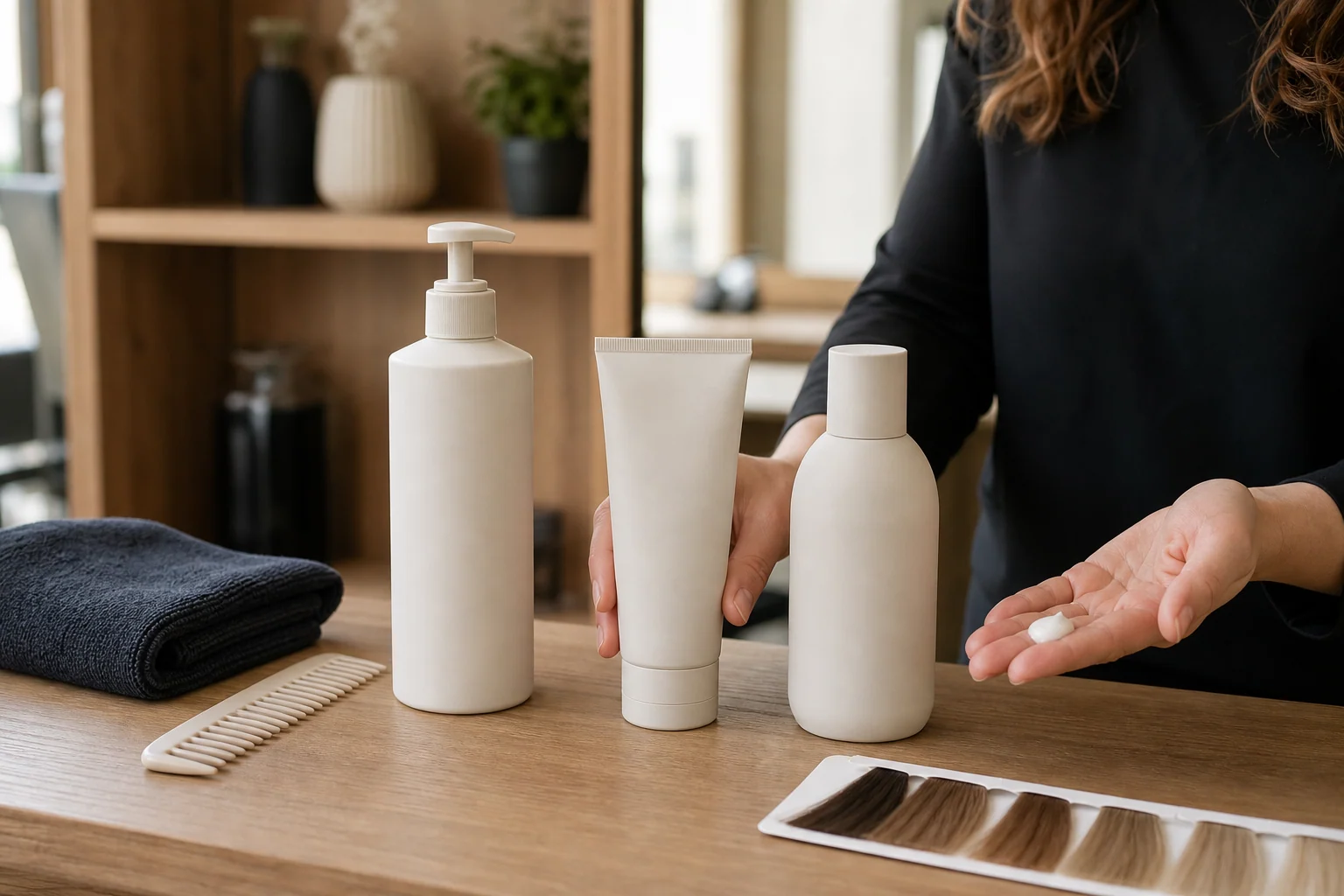
Use the recommended product during the service when appropriate. Show the amount, application area and technique. Let the client feel the finish and explain what they should expect at home. This makes the recommendation evidence-based and gives the client confidence that they can reproduce the routine.
Create three levels of routine
- Essential: the minimum routine needed to protect the service.
- Enhanced: an additional step for a specific concern such as heat, tone or texture.
- Complete: a full routine for clients who enjoy a more detailed home-care ritual.
Always make it acceptable to choose the essential option. Pressure may create a one-time sale, but clarity supports trust and repeat purchasing.
Document the recommendation
Record what was suggested, why it was relevant and what the client selected. At the next appointment, ask how the routine worked before recommending anything new. This follow-up turns retail into an ongoing professional conversation and helps the team avoid contradictory advice.
Measure useful retail performance
Do not look only at total product revenue. Track the percentage of clients receiving a documented recommendation, repeat purchases, returns, and whether the home routine supports colour longevity or styling satisfaction. Review results by service type so recommendations remain relevant.
Team language matters
Create short, natural phrases the team can adapt: “To keep today’s tone looking balanced, I would prioritise this cleansing routine,” or “You mentioned that styling time is the problem, so let me show you the one product that will make the biggest difference.” The goal is not a script that sounds identical from every stylist. It is a consistent standard for helpful advice.
A practical retail checklist
- Link every recommendation to a stated client goal.
- Explain use, quantity and frequency.
- Offer a manageable first choice.
- Record the recommendation.
- Review the result at the next visit.
A strong salon retail strategy improves continuity between appointments. When the recommendation is accurate and respectful, the client experiences it as part of professional care rather than an extra sale.
Related HairCoPilot guides
A four-week implementation plan
- Week 1: choose three high-volume services and define the main home-care objective for each.
- Week 2: create essential, enhanced and complete routines using products the team understands.
- Week 3: practise diagnosis and demonstration language during team training.
- Week 4: review documented recommendations, client questions and repeat purchases.
Remove products that cannot be linked to a clear service need or explained consistently. A smaller, well-understood assortment usually creates a better client experience than a large display that depends on individual selling confidence.
Keep recommendations connected to the service result and future consultation. Explore HairCoPilot for salons.